 Book Appointment
 800 7762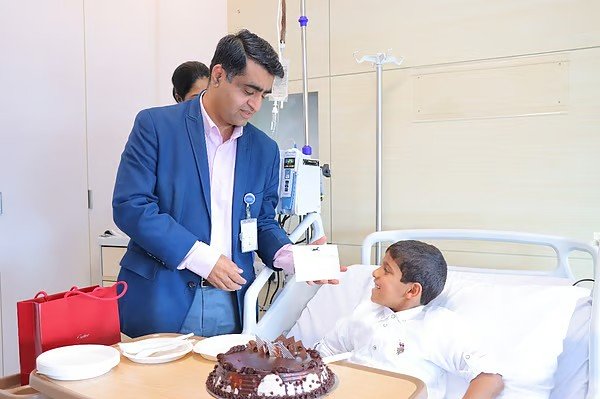
rthritis is often seen as a condition of old age, but doctors in the UAE are warning that a rare form affecting children can be far more aggressive — and even fatal — if not diagnosed early. The warning comes after an Emirati boy made a full recovery following specialised treatment at Sheikh Shakhbout Medical City (SSMC) in Abu Dhabi.
The child, Mohamed Al Mansoori, now seven years old, was diagnosed with systemic-onset juvenile idiopathic arthritis (JIA), one of the most severe inflammatory conditions seen in children. The disease can rapidly affect multiple organs and lead to life-threatening complications if treatment is delayed.
“This is a serious disease,” said Dr Kamran Mahmood, Consultant and Chair of the Paediatric Rheumatology Division at SSMC. “There’s a common misconception that arthritis doesn’t affect children, but it does — and in some cases, more severely than in adults.”
Systemic-onset JIA is considered the most aggressive form of childhood arthritis. Unlike other types that primarily affect the joints, this condition involves excessive activation of the innate immune system and can impact vital organs including the heart, lungs, kidneys and brain.
“Two-thirds of childhood arthritis–related deaths worldwide are linked to systemic-onset JIA,” Dr Mahmood said. “Children can deteriorate very quickly — sometimes within hours or days — which is why early diagnosis is absolutely critical.”
Global estimates suggest the condition affects three to four children per 100,000, though most available data comes from Western populations. According to Dr Mahmood, the true prevalence among Emirati children remains unknown due to the absence of national statistics.
“We don’t yet have local data, but based on clinical experience, we believe the condition may be more common — and potentially more severe — in this region,” he explained.
Mohamed initially presented with persistent high fever, rash and joint pain, and was treated for infection at a local hospital. When his condition failed to improve, he was referred to SSMC for further evaluation.
“His fever pattern and a characteristic salmon-pink rash were strong clues,” Dr Mahmood explained. Blood tests revealed extremely high ferritin levels, a marker of severe inflammation. “The levels were so elevated that the laboratory struggled to quantify them.”
Because certain blood abnormalities associated with systemic-onset JIA can mimic cancer, doctors recommended a bone marrow test to rule out malignancy. “It was a difficult discussion with the family, but after a thorough explanation, they agreed,” Dr Mahmood said.
Once cancer was excluded, Mohamed was put immediately on steroid therapy. He initially received anakinra, a medication requiring daily injections — a challenging treatment for a young child. Due to ongoing flare-ups, doctors later transitioned him to tocilizumab, a targeted biologic therapy. His treatment spanned over three years.
“He has now been stable for more than two years,” Dr Mahmood said.
Although Mohamed is currently in remission, doctors stress that the disease is not considered cured. “That distinction is very important for families to understand.”
“The condition can return, particularly during infections, puberty or periods of physical or emotional stress.”
Today, Mohamed is attending school, playing football and leading a normal life. Despite his healthy appearance, long-term monitoring remains essential.
“A delay in treatment — even by a few days — can have serious consequences,” Dr Mahmood pointed. “Systemic-onset JIA affects far more than the joints. But with prompt diagnosis and the right treatment, outcomes can be excellent.”
SSMC has treated more than 20 cases of systemic-onset JIA and is working with the Department of Health to establish a national database aimed at improving understanding of the disease in the UAE.
“Awareness among families and frontline clinicians is key,” Dr Mahmood added. “Recognising the warning signs early can save lives.”
Source: Khaleej Times